On the Journey to the Monastery
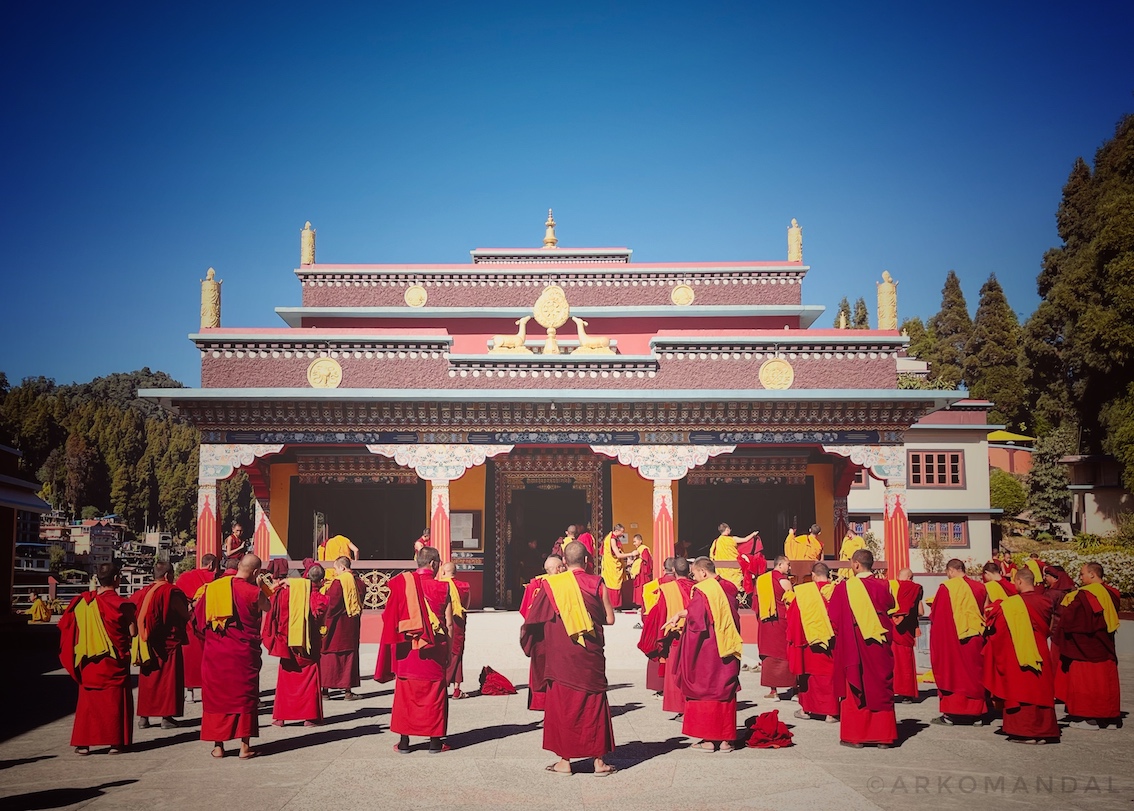
A few days ago, I visited a monastery nearly four hundred kilometres from my hometown. I went there on my bike. As the road unfolded, thoughts arrived—not in order, not with urgency. They came as they do when movement is steady and the mind is no longer entertained.
Suffering
Life, as the Buddha declared in his first Noble Truth, is inseparable from suffering. From birth onward, sorrow touches both body and mind. Even happiness, when it appears, is fragile and fleeting. Every pleasure carries an unspoken fear: the rich fear loss, the healthy fear illness, the beautiful fear decay, and the learned fear rivalry. Yet when joy arrives, the mind forgets this truth and mistakes temporary relief for stability.
The causes of suffering are often misunderstood. Some blame fate, chance, divine will, or circumstance. The traditions of Yoga and Vedanta point inward: suffering is self-created. It begins with the loss of contact with the true Self. From this loss arise ego and egotism, attachment and aversion, and the urge to cling to life as something that must be secured and defended.
When awareness of our deeper nature fades, a false center forms. This ego constructs a world of “me” and “mine,” success and failure, pleasure and pain. Driven by it, we strive endlessly—explaining, defending, proving—yet never fully arriving. Life becomes busy and reactive. Plans are made to escape discomfort. Urgency is mistaken for courage. Work grows, but without clear shape. Decisions accumulate, but none feel settled. Failure wounds the self; success feels brief and unstable; rest feels undeserved. Growth exists, but it remains fragile, because the center itself is unsettled.
Attention
Leaving is not healing. Pain walks patiently and is not outrun by distance. Those who hurry pass the lesson. Those who slow down begin to see.
Attention is the first practice. Return to the body. Notice the breath. Learn how much force is enough. Force without awareness harms; force with awareness aligns. Walk one step at a time. Let each action have a reason. Release what is unnecessary.
Strength is simple: awareness, contentment, confidence. Weakness is also simple: carelessness, indulgence, arrogance dressed as freedom. The wound does not disappear; it is governed. Nothing is allowed to lead blindly—not fear, not memory, not pride. Action must arise from presence.
Meditation is not an escape from life, but a restoration of contact with reality. It reconnects us with the true Self, loosens the grip of ego, steadies the restless mind, and brings perception back into alignment. Meditation dissolves the distance between observer and observed.
At the heart of all striving lie three desires: immortality, unlimited awareness, and unbounded joy. No external achievement can satisfy them. Peace comes only through Self-knowledge. When the Self is realized, fear loosens, clarity deepens, and life begins to settle into coherence.
Discipline
Things do not always go as planned. There are moments when slowing down is necessary. Rest is maintenance. It is duty. Burnout is negligence.
When the mind is disciplined, creation becomes possible.
When force is measured, risk becomes calculable.
When presence is steady, decisions stop trembling.
Silence filters intention. The path is often solitary. There is little feedback and long intervals without reassurance. Attention becomes the primary asset and must be guarded. Loneliness will visit. Do not medicate it with haste or noise.
Those who seek validation distort the work.
Only those who seek alignment remain.
Expansion is allowed only when balance holds.
Vision without restraint collapses.
Consistency replaces motivation.
Routine replaces inspiration.
Presence replaces ambition.
Build only what survives without applause.
Scale only what remains stable in neglect.
Completion is not the goal. Integrity is.
If you lead others, remember this: leadership is exposure, not elevation. Regulate impulse before direction. Make no decision to soothe insecurity. The moment power becomes pleasure, it has already failed.
As the year turns, restlessness appears. Some fear repetition. Some imagine escape. Both abandon the present moment.
Nothing essential changes at midnight. Time demands no urgency. What shapes life is the quality of attention carried forward.
Do not rush.
Do not be carried away.
Carry forward only what is coherent.
Release what required constant defense.
Begin the new year without noise.
Begin with presence.